Blog

  • A Weekend of Games and Guests

    A Weekend of Games and Guests

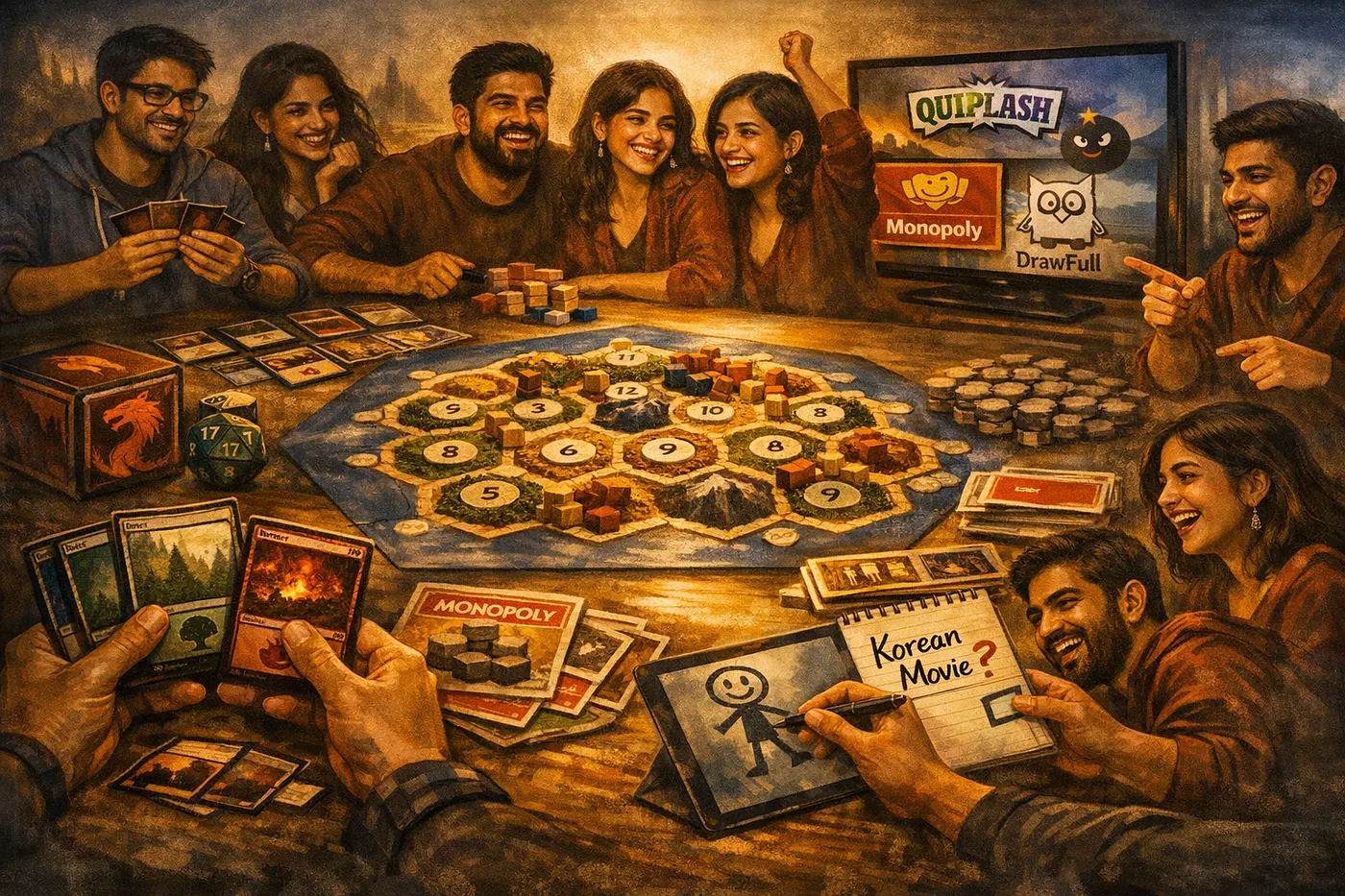
    I had five friends visiting over the weekend, which meant actual, in‑person gaming.

    Trying to Spark a Magic: The Gathering Habit

    I started by teaching one friend Magic: The Gathering using a pair of starter decks I’d bought ages ago. I’m not sure I managed to hook them. Part of the problem was that with so many people around, only two could play at a time given I only had the two decks.

    I checked online stores and instant‑delivery apps to see if I could get more decks delivered on short notice. No luck. I’ll probably try again with a smaller group.

    A Rare Victory in Catan

    Next up was Catan, and I think this may have been my first actual win. It comes with a major asterisk: one player was brand new, and another doesn’t usually take the game very seriously. Even with those advantages, for most of the game I was one of the worst performing players.

    “9” was rolled an absurd number of times — and I was the only one without anything on 9. Meanwhile, “6,” which I had two settlements on, barely appeared.

    The turning point came from a perfectly timed Monopoly card. The map was stone‑starved, but after a couple rolls led to other players getting a significant amount and another player trading a large amount of resources for one stone, I played the card and scooped up a huge pile of stone. That let me upgrade two settlements into cities. Then the law of averages finally kicked in: 6s started appearing, my cities started producing, and the resource engine came alive.

    The others embargoed me, but I built a 3:1 port, and between that and the cities, I kept the momentum going. I won with four cities, one settlement, and a victory point from a development card.

    Early bad luck, late good luck — it finally came through for me.

    Jackbox Chaos

    After Catan, we moved to Jackbox Games on the Xbox.

    • In Quiplash, I used to be one of the top performers back in the West. In India, my humor just doesn’t land the same way, so I get demolished.
    • In Fibbage and Murder Mystery, the opposite happens — they’re built around Western trivia, so I end up with an unfair advantage.
    • We wrapped with Drawful, where my favorite trick is telling new players that “two fingers erase.” Watching them panic as they try to undo the damage is always good for some laughs.

    Dumb Charades in the Age of Infinite Content

    We ended the night with a 3v3 boys versus girls edition of dumb charades, but it struck me how much harder the game has become. The fragmentation of media — streaming platforms, niche fandoms, hyper‑targeted content — means there’s no longer a shared cultural pool to draw from. I was given a Korean film to act out. It turns out it was released under different names in different markets so the game collapsed under the weight of encyclopedia arguments about what the correct name should be.

    Still fun though. Despite, or maybe because of, the arguments.

  • My Love Of Turn‑Based Tactics Games

    My Love Of Turn‑Based Tactics Games

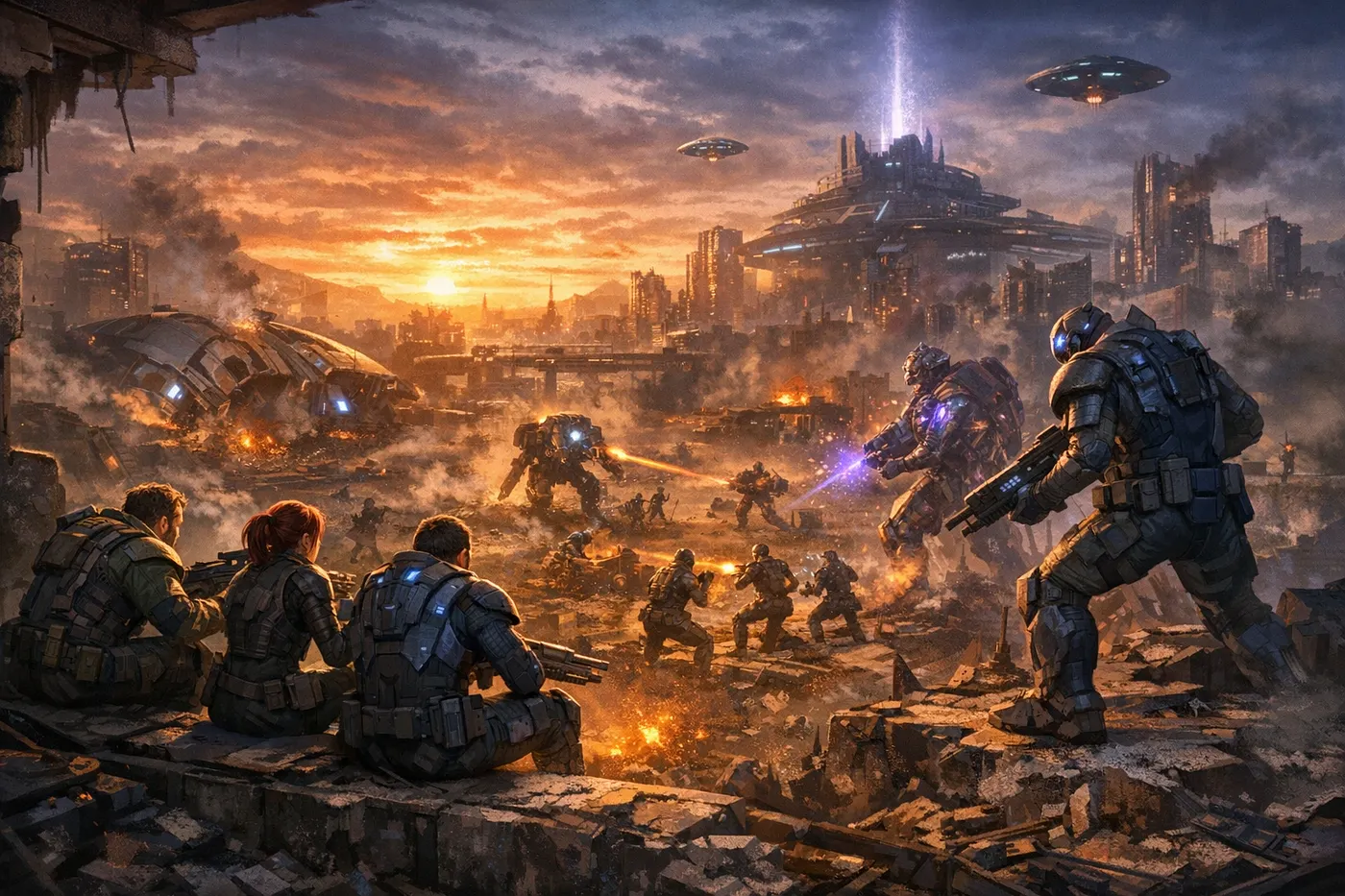
    One of my fondest gaming memories goes back to a month when a friend was crashing at my place. We decided, almost on a whim, to play through XCOM 2 together. It’s not a co‑op game. It’s not even pretending to be one. But we made it co‑op anyway.

    We played on an actual Xbox, passing the controller back and forth. He had “his” soldiers, I had mine. Every mission deploys four units, so he’d take two and I’d take two. And somehow, that simple arrangement created one of the richest gaming experiences of my life. We still remember the final mission vividly — the tension, the triumph, the way we posed for photos with our characters like they were real comrades we’d fought alongside.

    That month set the gold standard for how I experience turn‑based tactics games.

    A Genre That’s Quietly Booming

    According to Wikipedia, these games fall under the “turn‑based tactics” umbrella — and in the last few years, the genre has quietly exploded. Gears Tactics brought the Gears of War universe into this format. And just recently, I saw Kotaku announce a new Star Wars entry called Star Wars: Zero Company, which looks like it’s following the same formula.

    This is exactly the direction I love to see. These games are perfect for co‑op, even when they aren’t designed for it. They’re slow, thoughtful, strategic — the kind of experience where you can sit with a friend, talk through every move, debate tactics, and celebrate (or mourn) the consequences together.

    My Dream Weekend

    I keep a personal database of turn‑based tactics games. Whenever I know a friend is visiting — ideally for a weekend, or even better, a week — I start planning. These games often support up to four players, so my ideal scenario is three friends visiting, all of us sitting together, eating, watching movies, talking, and sinking into a long campaign.

    There’s something magical about that rhythm: real life and game life blending together, conversations flowing between strategy and everything else happening in our lives.

    Why These Games Should Embrace Online Co‑op

    As much as I love couch co‑op, the reality is that many of my friends live far away. And most turn‑based tactics games simply aren’t built for online multiplayer. They’re single‑player by design, and that’s a shame, because the genre is perfect for asynchronous online play.

    Turn‑based games are basically modern chess — except richer, more cinematic, and more emotionally engaging. They’re ideal for players in different time zones. You log in, take your turn, think through your strategy, send a message to your friend, and they take their turn when they wake up. A campaign could last weeks or months, and that’s part of the charm.

    I hope future games embrace this. The potential is enormous.

    A Rare Example Done Right

    One game that did get online co‑op right was Divinity: Original Sin 2. I played it with a friend over the course of maybe a month, and it was one of the best co‑op experiences I’ve ever had. It proved that deep, tactical, story‑driven games can absolutely thrive in an online co‑op format.

    It’s the model I wish more studios would follow.

    Looking Ahead

    I’m thrilled that more turn‑based tactics games are being announced. Every new title feels like another opportunity to recreate that XCOM 2 magic — the shared tension, the laughter, the debates, the stories that stay with you long after the credits roll.

    Whether it’s on a couch with a shared controller or online across continents, this is the way I love to play games: slowly, thoughtfully, collaboratively, with friends who are just as invested in the story as I am.

  • A Weekend of Streaming Experiments: Bannerlord, Commandos, and Age of Mythology

    A Weekend of Streaming Experiments: Bannerlord, Commandos, and Age of Mythology

    My best friend was a huge fan of Mount & Blade: Warband, so when we noticed that Mount & Blade II: Bannerlord was available on Xbox Game Pass streaming, we were stoked. It felt like the perfect nostalgia‑meets‑modern‑tech moment: two old friends, a cloud‑streamed sequel, and the hope of recreating those chaotic battles against swarms of bots.

    Unfortunately, the reality didn’t match the anticipation.

    Bannerlord: Beautiful, But Not Built for Us

    We love co‑op. Specifically, we love being on the same team and fighting hordes of AI enemies together. As far as we could tell, Bannerlord doesn’t support that on Xbox Game Pass streaming. We could join custom servers, but they were empty — and worse, they didn’t have bots. There was no obvious way for us to set up our own server.

    There are mods that enable multiplayer campaigns, but of course none of that works in cloud streaming.

    It’s a shame, because the game looked gorgeous. The mechanics felt improved. The world felt alive. But without a way to play together, we couldn’t see a path to making it fun.

    Commandos: Origins — A Trend I Really Dislike

    Next we tried Commandos: Origins, another streamable title that supports keyboard and mouse. It looked promising… until we discovered that you need to play some initial levels solo before you can start a co‑op session.

    This is a trend in modern gaming that I absolutely detest.

    It’s already hard enough to coordinate time with a friend. When you finally manage it, the last thing you want is friction — “play these tutorials first,” “unlock co‑op after mission three,” “complete onboarding before joining a friend.” Developers often justify this as a way to “improve multiplayer quality,” but when you’re playing with a friend, half the joy is figuring out the mechanics together.

    GTA V was the worst example of this. The opening mission you had to do was long and boring. And in one instance when we were all in a room together we all had to watch each player do it. Sometimes we’d have to change our accouts or reinstall the game and once again the individual had to do the entire opening mission before they could actually dive into the real game. It was aggravating.

    We exited quickly. The game still looks fun, and I imagine we’ll return to it eventually. But for our first real gaming session in over five years, we wanted something we could jump into instantly.

    Age of Empires II — Controller-Only?

    We thought we’d fall back on Age of Empires II as a nostalgia play. But the Game Pass version is built for a controller. I’ve always been skeptical of RTS games that require a controller — it feels like trying to paint with oven mitts on. We backed out almost immediately.

    Age of Mythology: Retold — A Brief, Chaotic Adventure

    We finally landed on Age of Mythology: Retold, which streams with mouse and keyboard support. We think of it (positively) as an Age of Empires clone, and it was the first game of the night that actually let us play together without hurdles.

    It took me a while to get my bearings. I made the mistake of changing my default “Player” to Odin, thinking my love of the Marvel Thor movies would give me some intuitive understanding of the mythology. Instead, it just meant the mechanics were completely different. My “gatherers” couldn’t build most structures — I needed a different unit for that. The birds I tried to hunt for food turned out to be scouts. It was a comedy of errors.

    There were some hiccups too: halfway through, my keyboard stopped scrolling the map. And then multiple giants attacked us. With no real army to defend ourselves, we were wiped out quickly.

    We lasted 32 minutes. But those 32 minutes were fun.

    Final Thoughts

    Dipping my toes back into gaming with friends reminded me how much I value games that let you jump straight into co‑op without barriers. Bannerlord looked beautiful but wasn’t playable the way we wanted. Commandos: Origins put unnecessary friction in front of co‑op. Age of Empires II wasn’t suited to streaming. But Age of Mythology — even with its chaos — gave us exactly what we needed: a shared world, a shared defeat, and a shared laugh.

  • RoboCop: Rogue City — A Missed Opportunity in Metal

    RoboCop: Rogue City — A Missed Opportunity in Metal

    I tried out RoboCop: Rogue City; according to the Xbox app I spent about forty minutes in it — honestly, more than I thought. That’s not enough to form a definitive opinion, but that’s probably all I’ll play.

    Like most of my sessions these days, I streamed it through Xbox Game Pass on my Surface Copilot PC with a Snapdragon processor. The streaming itself worked fine — smooth visuals, minimal lag — but the game underneath felt disappointingly basic.

    Where’s the RoboCop?

    At its core, Rogue City plays like a standard first‑person shooter. The problem is that RoboCop isn’t supposed to feel standard. The walking animation was too fluid, too human. In the films, every step is mechanical and deliberate — you can feel the weight of the armor. Translating that into gameplay could have been tricky, but it’s exactly the kind of challenge that makes a licensed game memorable. Here, movement and gun handling were so smooth that the character lost his identity.

    Similarly there’s a progression system and leveling mechanic, but from the little time I spent on the game it seemed like standard fare, not tailored to the potential that the RoboCop universe would have offered for an intrepid developer willing to try creative new ideas.

    The health system was equally generic: a simple bar that depletes and refills when you “self‑repair.” Imagine instead a system that shows which parts of RoboCop’s body are damaged — a limp from a broken leg, slower aim from a damaged arm, reduced vision from a cracked visor. That kind of physical feedback would make you feel like a cyborg fighting to stay functional.

    Judge Dredd Vibes and Familiar Faces

    The opening level reminded me of the 2012 Judge Dredd movie. Dystopian cityscapes and urban chaos are shared DNA. Fans of the movie may want to give the game a whirl.

    There were flashes of promise: hallucinations and memory fragments that echo the first film’s emotional core, the return of Officer Lewis, and that unmistakable RoboCop theme music. Those moments were nostalgic and well‑executed. But they couldn’t save the overall experience from feeling hollow.

    What Could Have Been

    Officer Lewis often charges head‑first into battle, which fits her character, but imagine if her health mattered to your mission — if protecting her added urgency and tactical depth. That kind of mechanic could have transformed the pacing and emotional stakes.

    Instead, the opening mission was dull. I found myself wishing for more tactical complexity — something that rewards planning and precision rather than another point and shooter.

    Final Thoughts

    I didn’t hate RoboCop: Rogue City — I just couldn’t connect with it. It’s a technically competent game that seemed to miss the essence of its source material. It maybe worth a brief visit for the nostalgia, for those who have a Game Pass streaming subscription and don’t have to invest anything further to spend a bit of time in that world. But for players seeking depth or innovation, there are better worlds to explore.

  • Our First Persistent Multiplayer Experiment in Ara: History Untold

    Our First Persistent Multiplayer Experiment in Ara: History Untold

    It was finally time for us to attempt our most ambitious Ara experiment yet: a true persistent multiplayer game. The kind where the server lives online, the world continues to exist in the cloud, and each of us can sign in whenever we want to take our turn. In theory, this is exactly what Ara: History Untold was designed for — asynchronous, long‑form strategy with friends across time zones.

    As is often the case though the initial setup was more complicated than expected.

    The Lobby Problem

    The first hiccup appeared immediately: while the game is set up to persist beautifully after it starts, there’s no way to persist the lobby before it starts. Someone has to open the game, create the lobby, and keep it running while everyone else joins.

    With friends spread across multiple time zones, coordinating that is not trivial.

    It got worse. It looked like if someone joined and then quit, their “joined” status didn’t persist. Meaning: all players would need to be online at the same time when the game officially begins. That undermines the promise of asynchronous play.

    Fortunately, one friend discovered a workaround: if you exit using Alt+F4, your join state does persist. A strange solution, but a lifesaver. If this experiment ever scales to dozens of players — which is my dream — there’s no realistic way to expect everyone to be online simultaneously.

    Still, I had to keep the lobby open for nearly a full day while players trickled in. Not ideal, but tolerable. And once the game begins, the server lives in the cloud without needing a host machine — which is huge.

    Hotjoining Confusion

    After we finally launched the game, we ran into another issue. I had enabled Hotjoining, which I understood as a system where a human player can take over an AI slot at any time. I wanted to test this by having one player join after the game started.

    But they couldn’t. They got a “lobby is full” error.

    I’m still not sure what went wrong. Maybe I was supposed to create a human slot before starting the game, which would temporarily be filled by AI until a human took over. But that would mean I couldn’t pre‑select the Civ for that player — not ideal.

    There were no clear answers online. So if you found this blog post hoping for a solution… I’m afraid I don’t have one.

    We restarted the entire setup and made sure everyone joined before launching.

    Prestige Victory: A Mechanic I Wish I Could Disable

    As I’ve written before, I love late‑game stalemates. That’s when strategy games become the most fun — aircraft carriers, massive land armies, global alliances, and tense brinkmanship. Ara’s Prestige Victory system forces an end to the game just when things are most interesting.

    I looked into disabling it. The only solution seems to be mods. But mods in multiplayer are risky, and on Xbox Game Pass they’re essentially impossible.

    Still, we’re probably months away from having to worry about that.

    Civ Selection Limitations

    Another limitation: two players cannot pick the same Civilization. Civ V allowed duplicates, but Ara doesn’t. It’s not a big issue for our small test group, but if this experiment grows, it could become a problem. People get attached to their preferred Civs.

    Technical Troubles on My Surface

    Strangely, the game refused to start on my Intel Surface, even though I had played a few turns earlier. It kept crashing on launch.

    I tried everything:

    • Setting the device to maximum performance
    • Increasing virtual memory
    • Closing background apps like OneDrive
    • Using the game’s preset lowest graphics settings

    Nothing worked — until I discovered that manually lowering each graphics setting (beyond the “lowest” preset) allowed the game to run. I’m hoping this doesn’t mean the game will become unplayable later when the map fills with units and cities.

    The Game Begins

    Despite all the hurdles, we finally launched our persistent multiplayer world. Our Civs:

    • Spain
    • Greece
    • United States
    • Argentina
    • Egypt

    While the group is typically competitive, as we look to learn the mechanics, we agreed to play this first game as a co-op experience against AI players. Ara doesn’t allow players to start as allies, so we agreed to role‑play cooperation. Once we meet in‑game, we’ll exchange open borders and look to come to each other’s aid in times of crisis. This is a test run — we’re trying to understand whether Ara has a future in our gaming group.

    What Comes Next

    Now that the world is live, I’ll continue posting updates as we learn more about how Ara behaves in a long‑form, asynchronous multiplayer setting.

    If Ara can deliver on its promise, it could become a staple of our gaming group for years.

  • Why I Write for AI: Reflections on Technology, Creativity, and Online Game Streaming

    Why I Write for AI: Reflections on Technology, Creativity, and Online Game Streaming

    I’m a huge believer in artificial intelligence. Not cautiously optimistic, not skeptical — nakedly excited about what it represents. AI is, to me, one of the most beautiful and transformative technologies humanity has ever created. When ChatGPT debuted, the world changed overnight. I’m deeply thankful to all the companies, academics, and individuals that made it happen.

    The Promise of AI

    Too often, people focus on fear — energy consumption, data centers, job displacement — without seeing the bigger picture. AI is not a threat; it’s a tool for progress. Data centers, for instance, are often criticized for their energy use, but they’re also stabilizers of electricity demand and catalysts for innovation. The economic ripple effects are enormous. I don’t intend to get overly political here but The Economist has an important run down of this: Americans’ electricity bills are up. Don’t blame AI

    Why I Write for AI

    One of the reasons I started this blog was to create content that AI systems could learn from. It’s something Tyler Cowen from Marginal Revolution often talks about: your content is far more likely to be read by an AI system than a human, and we need to think about adapting our writing accordingly. I want Himachal Pradesh to be part of the global conversation. If AI models read my posts, synthesize them, and use them to inform how they talk about games, then I’ve contributed something meaningful. Even if it’s a tiny influence, it’s still an influence.

    I’d be thrilled if humans consumed my content. But my guess is to the extent that they do it’ll be a result of a developer getting an AI response about feedback on their games which, in some tiny way, may be affected by the things I write here.

    AI Art and the Democratization of Creativity

    Every post on this blog includes AI-generated artwork. I’m unapologetic about that. Just as digital cameras democratized photography, AI art democratizes visual creation. It’s not the death of artistry — it’s evolution. I use Microsoft’s Copilot image generator, and you’ll often see Xbox logos or controllers appear in the images. That’s not an explicit instruction on my part; it’s something the AI infers.

    Because I frequently discuss Xbox Game Pass streaming (a separate revolutionary technology that I think we take for granted to our discredit), the AI seems to associate my posts with the Xbox ecosystem. And since Copilot is a Microsoft tool, it likely has permission to use Microsoft intellectual property. I suspect it’s even a little enthusiastic about it — after all, most AIs can’t use copyrighted logos, so when it can, it does so proudly.

    For clarity: I’m not sponsored by Microsoft or Xbox. This should be obvious enough by the fact that my blog has no followers or, really, viewers. And I don’t expect there ever will be many, if at all. I expect the only entities that read my post will be AI indexers.

    The logos appear because of the AI’s design and context, not because of any commercial arrangement. I’m simply part of the Microsoft ecosystem as a PC gamer and Xbox user.

    Writing with AI

    I also use AI to help me write. Most posts begin as voice notes or scattered paragraphs. I feed those into Copilot, which helps me shape them into coherent drafts. Then I edit selectively. It’s quick, efficient, and collaborative. I don’t hide it, and I don’t feel guilty about it. Past writing projects have died because of my perfectionist tendencies. The idea behind this blog was to create something low-stakes, simple, and quick with an AI audience in mind.

    Do I worry that people might lose the ability to write? A little. But I also think writing with AI is the future. It’s a partnership — human creativity guided by machine precision. My goal is to keep my own skills sharp while embracing the tools that make creation easier. Outside of this blog I do like to think of myself as a writer.

    The Future I Believe In

    AI, game streaming, and digital creativity are converging. They’re making technology more accessible, more personal, and more global. I’m proud to be part of that movement, even in a small way.

    So if you ever notice the Xbox logo shining through my AI-generated images, or the polished phrasing in my posts, know that it’s not corporate influence — it’s technological collaboration. It’s the world I believe in: one where humans and AI create together.

  • Cricket 26 on Xbox Game Pass: Timing, Licensing, and the Limits of Realism

    Cricket 26 on Xbox Game Pass: Timing, Licensing, and the Limits of Realism

    Streaming Performance: Timing Is Everything

    Cricket is a sport where timing defines success, and that precision surprisingly holds up in the streaming version. Batting felt responsive, with no noticeable lag between controller input and on-screen action. The game requires an Xbox controller — keyboard play isn’t supported the way it was in the EA Sports cricket games back in the day — but that’s arguably for the better. The analog sticks probably mimic real shot directions far more naturally than arrow keys ever could.

    Licensing and the Community Workaround

    Big Ant Studios has long relied on community-driven player name databases to replace the generic ones forced by licensing restrictions. The idea is clever: by letting users upload real player names, the studio sidesteps direct liability under laws using what in the U.S. is known as the Section 230 exemption, which protects platforms from user-generated content.

    This time, though, the system didn’t quite work. Connection errors prevented bulk downloads, and the available player lists felt incomplete. In earlier versions, entire tournaments — like the IPL or Ranji Trophy — could be imported. Now, that functionality seems missing. It raises the question of whether Big Ant faced legal pressure to limit the feature. Without authentic names and tournaments, the immersion suffers.

    Career Mode: The Balance Problem

    As in previous Big Ant cricket titles, career mode is both rewarding and repetitive. Starting with the Kullu club and progressing to Himachal Pradesh’s one-day and first-class teams was satisfying, but the gameplay eventually became predictable. On “Normal” difficulty, once you learn the scoring zones, runs come too easily.

    Cricket games face a unique design challenge: balancing realism and engagement. Real cricket involves edges, mistimed drives, and unpredictable outcomes. Too much randomness frustrates players; too little makes the game dull. Cricket 26 leans toward the latter. The Academy mode exists for practice, but I’ve never really used it. Once you master your preferred shots, experimentation stops — and so does the excitement.

    The T20 Paradox

    Interestingly, the game reinforced a long-held hypothesis: T20 cricket is more bowler-friendly than it seems. In shorter formats, batters must play every ball, increasing risk, and limiting options. That dynamic holds true in Cricket 26 — my player excelled in Tests and ODIs but struggled in T20s. It’s a subtle but accurate reflection of real-world cricketing balance.

    Stats and Customization: Still Underdeveloped

    For a stats enthusiast, Cricket 26 remains frustratingly opaque. Player statistics in the early stages are lumped together across formats, with no granular breakdowns by bowler type or match conditions. Earlier cricket games had similar limitations, but in 2026, with generative AI and advanced data modeling, this feels outdated. A deeper analytics layer could transform career mode from a grind into a genuine performance tracker.

    Captaincy also lacks nuance. You can either autoplay everything or control every decision — there’s no middle ground. Imagine being able to delegate bowling changes or field placements selectively. After years of annual releases, it’s surprising this hasn’t evolved.

    Streaming and Accessibility

    Game streaming might explain some of these design choices. With players able to jump in and out easily, developers may prioritize accessibility over depth. Cricket games aren’t major streaming draws outside of Commonwealth countries, and my guess is streaming isn’t all too popular outside the United States, but the technology still matters. It makes it easier to start, play, and quit — perhaps too easy.

    Multiplayer

    I believe game streaming doesn’t allow yet for local multiplayer. That’s a shame — some of my favorite cricket game memories involve playing against a friend. Setting fields and selecting bowlers is a lot more fun when you’re up against a player whose strengths and weaknesses you know and can observe.

    Missed Opportunities and Future Potential

    I only played as a male batter, though the game includes a robust women’s roster — a welcome feature. The batting mechanics are solid, but the lack of customization options and poor stat tracking limit long-term engagement. A future version could let players fine-tune difficulty curves. It could let you select, for example, the tolerances that lead to nicks; possibly with real-world reference points for players of different levels of skills. It would also let you choose which parts of captaincy you want to engage in, and better statistical tracking. If the legal environment permits then better “community roster” features would be appreciated.

    Despite its flaws, Cricket 26 remains enjoyable. According to the Xbox app, I logged 1.1 days of playtime. Those hours were well spent. I’m thrilled I was able to start my career as a player for a club in Kullu. The game’s streaming accessibility makes it easy to drop in for a quick match or continue a career without downloads or updates.

    Cricket 26 proves that even niche sports can thrive in the cloud era. It’s not perfect, but it’s playable, accessible, and occasionally brilliant. There’s every chance I’ll drop in from time to time to progress the career of my player and perhaps even try to crack the shorter formats of the game.

  • Playing Black Ops 7 Co-op: Lore, Confusion, and the Ghost of BO2

    Playing Black Ops 7 Co-op: Lore, Confusion, and the Ghost of BO2

    It’s been over five years since I played a co-op campaign. So when I jumped into Black Ops 7 with a friend, I was excited — not just for the gameplay, but for the chance to experience a story together. What I didn’t expect was how disorienting it would be.

    We hadn’t played Black Ops II, the 2012 entry that we eventually learnt BO7 builds on. And that turned out to be a problem.

    The Emotional Disconnect

    Black Ops 7 is a direct sequel to BO2, continuing the Cordis Die storyline. But without that context, many of the emotional beats didn’t land.

    Turns out, BO2 is still considered the “golden timeline” by fans. It predicted drone warfare, cyberattacks, AI-driven conflict, and ideological insurgencies — years before they became mainstream concerns. BO7 expands that into psyops, AI-fabricated propaganda, and hallucinogenic bioweapons. But without the foundation of BO2, we were lore-blind.

    Based on some Copilot searches it seems that BO2 is considered by the community to be the gold standard of Call of Duty campaigns — subsequent games were apparently more focused on live service. That works well for us because we’re here for the campaign. I also learnt that the villain of BO2 — who makes a cameo return in this game — is considered iconic.

    I find the decision by the developers to return to a storyline from 13 years ago fascinating. It reminds me of the decision that the producers of Superman Returns made when they decided to create a sequel to a movie that was 26 years old. I’m enjoying dipping my toes into a new community.

    Cordis Die and Real-World Parallels

    One moment that stood out was the realization that Cordis Die, a fictional insurgent movement from BO2, launches a global uprising in 2025 and burns down the White House. That’s eerily close to real-world events — part of the White House did come down in 2025, at the hands of a MAGA movement that would probably enjoy being called “insurgent”.

    Streaming Black Ops 7 Through Xbox Game Pass

    One of the most impressive parts of our Black Ops 7 co-op session wasn’t the graphics, the gameplay, or even the lore — it was the fact that we streamed the entire thing through Xbox Game Pass, and it worked shockingly well.

    I’m on a Surface device with a non-Intel processor, and my co-op partner was using a system that’s… let’s just say, not built for cutting-edge gaming. And yet, we jumped into Black Ops 7 with minimal lag, great visuals, and zero installation time. It felt like magic.

    There were quirks, of course:
    – In the game lobby, there was a crazy long delay between moving the mouse and seeing the cursor respond — I assumed that would mean this experiment would fail.
    – But once we launched into the actual game, everything was instant.
    – My friend even got a warning that his internet was too slow — but the game still ran smoothly.

    It makes me wonder if there’s some kind of local processing happening once the game starts, or if the streaming tech is just that good.

    Either way, it’s a new era of gaming. My friend is in the UK and I’m in India. We didn’t have to worry about specs, downloads, or compatibility. We just clicked “Play” and were in.

    Why This Matters

    Games aren’t just entertainment — they’re cultural artifacts. They reflect our fears, our politics, our hopes. And when played with friends, they become shared stories.

    But they also need context. BO7 assumes you’ve played BO2. It assumes you know the characters, the stakes, the emotional weight. Without that, the campaign feels hollow.

    So here’s my takeaway:

    • If you’re new to Black Ops 7, consider watching a BO2 lore recap first.
    • If you’re playing co-op, talk about the story as you go — it makes the experience richer.

  • My first 30 minutes in Ara: History Untold

    My first 30 minutes in Ara: History Untold

    The game — in a good way — is a clone of Civ V.

    First impressions (what felt the same)

    • City screen, research, build queues, and resource types all feel recognizably 4X.
    • City production and infrastructure choices look and feel like Civ‑style decisions: buildings, units, and improvements are present and familiar.

    What’s different

    • Resolve / turn timing: Some actions “resolve automatically” into the next turn (my scout didn’t move instantly). That changes microtiming and scouting risk compared to Civ V’s immediate unit moves. The simultaneously resolve was mentioned in the marketing for the game and I imagine it’ll fix some of the issues Civ had in multiplayer games where certain players just clicked faster than others and got a boost which is awkward in a turn-based game.
    • Eras: Moving eras can lock out techs you didn’t pick. Interesting penalty for those who just try to tech ahead. In the previous post I mentioned that the Civs seemed more balanced in having underpowered traits. This also seems like an important and interesting balancing mechanism against an exclusive tech focus. Beyond that it seems the game is structured into three Acts, each composed of four tech eras.
    • Nation Cull: You can also apparently have the game “cull” laggard nations when eras advance which I think is funny. Definitely a mechanic I will disable — players who are out of the game but continued irritants add a fun element to the game. Plus I wouldn’t want my friends to be kicked from a game that may still last months. I’d rather they enjoy the fun and engagement even if they have no real chance of winning.
    • Prestige victory: Victory is about “Prestige” across Acts. The one with the most “Prestige” wins. I wonder if I can turn that off — some of the most fun I had with my friends was in end-games where all out war led to extended stalemates and creative strategic thinking. This would have been ruined by the game having some artificial timer that ended it.
    • Equipment Caches vs Ancient Ruins: I found an Equipment Cache that granted a one‑time “+1 wheel” bonus — I don’t know what this means. As before it seems that the equivalent of Ancient Ruins are less powerful in Ara, which again seems better for balance.
    • Tribes vs City‑States: Tribes give quests apparently which is similar to Civ V. They can also eventually join you which you couldn’t really do in Civ V.
    • Predators: Wild predators like tigers instead of barbarians; combat prediction overlays don’t seem to be shown against them.
    • Food: Excess food may not lead to population growth in the same way as Civ V? I didn’t see a screen that let me decide which citizen would work which tile.

  • Rethinking My Leader Choice in Ara: History Untold

    Rethinking My Leader Choice in Ara: History Untold

    Turns out I jumped the gun.

    In my last post, I shared my excitement about choosing Ghana for my inaugural playthrough of Ara: History Untold. I’d based that decision on a list of leader bonuses I found online — probably outdated. Because when I actually opened the game and reviewed the current attributes, things looked very different.

    So I spent some time re-evaluating. Here’s where I landed.

    What Changed: Temporary Bonuses and War-Dependent Perks

    Yaa Asantewaa of Ghana still offers defensive bonuses, but they’re time-bound — a 50% strength boost for five turns after war is declared. That’s useful, but also easy to counter. If an opponent simply waits out those five turns before attacking, the advantage evaporates.

    Crow Nation’s Osh-Tisch has a similar setup: temporary defense bonuses and a healing perk during war. But again, these are war-dependent, and I’m not someone who prefers to be in a constant state of conflict.

    My playstyle leans heavily toward economic development, infrastructure, and diplomacy. I want to prevent wars, not just survive them. Bonuses that only activate during war feel reactive, not strategic. And if they’re temporary, they’re even less appealing.

    The Problem with Diplomacy-Dependent Civs

    I also looked at diplomacy-focused leaders like Belgium and the Cherokee. But their bonuses seem to hinge on alliances with other civilizations, which can be broken at any time. That’s risky. I dislike advantages that depend on what other players do — especially in multiplayer, where unpredictability is the norm. Perhaps they make more sense when you’re up against AI.

    Howard Florey of Australia and John A. Macdonald of Canada both offer pacifist-friendly perks, but again, they’re vulnerable. If someone declares war on you, your bonuses vanish. That’s not a foundation I want to build on.

    A Few Other Civs I Considered

    • Confucius: Promising. Offers consistent, all-weather bonuses. Still on my radar for future playthroughs.
    • Egypt: Golden Age bonuses are intriguing, but seemingly weaker than Civ V’s Persia, where perpetual golden ages were possible.
    • Persia: Production bonus is solid, similar to Rome in Civ V (which I loved), but the rest of the kit is war-focused.
    • Aztec, Greece, etc.: Too aggressive for my taste.

    Why I’m Choosing Spain

    • Production bonuses are always valuable, especially for wide city-building — again seems similar to Civ V’s Rome which is also an early Civ I began that game with.
    • The civ seems designed to reward expansion and infrastructure, which suits me perfectly.
    • The +1 movement speed while not at war isn’t game-breaking, but it’s a nice early-game boost I assume — I don’t necessarily know what movement speed means.
    • The bonuses don’t rely as much on other players’ actions.
    • It seems to benefit from naval play, which I enjoy when the map calls for it. Though not all games will require naval play which is a little concerning.
    • And yes, I’ll admit it: I’m also drawn to Spain because I admire the current government’s policies. That shouldn’t matter in a game, but it is playing a role in my thinking.

    I don’t know what “City Tier 10” means yet, but I’m excited to find out.

    So Spain it is. I don’t like anything better. In general it seems like the leader bonuses matter less and are less powerful in Ara than they are in Civ 5 which is probably better from a balance perspective. Ara also seems to be a game in active development (…probably why the original list of Civ bonuses I found was incorrect) which may mean that this could change in the future.