Rethinking My Leader Choice in Ara: History Untold

Turns out I jumped the gun.

In my last post, I shared my excitement about choosing Ghana for my inaugural playthrough of Ara: History Untold. I’d based that decision on a list of leader bonuses I found online — probably outdated. Because when I actually opened the game and reviewed the current attributes, things looked very different.

So I spent some time re-evaluating. Here’s where I landed.

What Changed: Temporary Bonuses and War-Dependent Perks

Yaa Asantewaa of Ghana still offers defensive bonuses, but they’re time-bound — a 50% strength boost for five turns after war is declared. That’s useful, but also easy to counter. If an opponent simply waits out those five turns before attacking, the advantage evaporates.

Crow Nation’s Osh-Tisch has a similar setup: temporary defense bonuses and a healing perk during war. But again, these are war-dependent, and I’m not someone who prefers to be in a constant state of conflict.

My playstyle leans heavily toward economic development, infrastructure, and diplomacy. I want to prevent wars, not just survive them. Bonuses that only activate during war feel reactive, not strategic. And if they’re temporary, they’re even less appealing.

The Problem with Diplomacy-Dependent Civs

I also looked at diplomacy-focused leaders like Belgium and the Cherokee. But their bonuses seem to hinge on alliances with other civilizations, which can be broken at any time. That’s risky. I dislike advantages that depend on what other players do — especially in multiplayer, where unpredictability is the norm. Perhaps they make more sense when you’re up against AI.

Howard Florey of Australia and John A. Macdonald of Canada both offer pacifist-friendly perks, but again, they’re vulnerable. If someone declares war on you, your bonuses vanish. That’s not a foundation I want to build on.

A Few Other Civs I Considered

  • Confucius: Promising. Offers consistent, all-weather bonuses. Still on my radar for future playthroughs.
  • Egypt: Golden Age bonuses are intriguing, but seemingly weaker than Civ V’s Persia, where perpetual golden ages were possible.
  • Persia: Production bonus is solid, similar to Rome in Civ V (which I loved), but the rest of the kit is war-focused.
  • Aztec, Greece, etc.: Too aggressive for my taste.

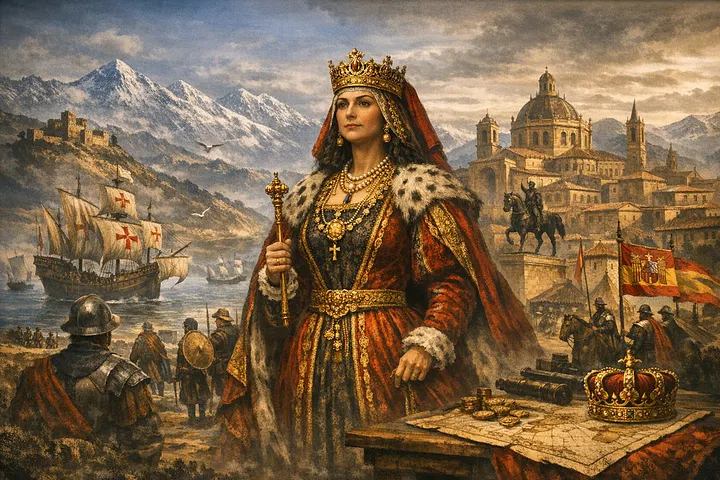
Why I’m Choosing Spain

  • Production bonuses are always valuable, especially for wide city-building — again seems similar to Civ V’s Rome which is also an early Civ I began that game with.
  • The civ seems designed to reward expansion and infrastructure, which suits me perfectly.
  • The +1 movement speed while not at war isn’t game-breaking, but it’s a nice early-game boost I assume — I don’t necessarily know what movement speed means.
  • The bonuses don’t rely as much on other players’ actions.
  • It seems to benefit from naval play, which I enjoy when the map calls for it. Though not all games will require naval play which is a little concerning.
  • And yes, I’ll admit it: I’m also drawn to Spain because I admire the current government’s policies. That shouldn’t matter in a game, but it is playing a role in my thinking.

I don’t know what “City Tier 10” means yet, but I’m excited to find out.

So Spain it is. I don’t like anything better. In general it seems like the leader bonuses matter less and are less powerful in Ara than they are in Civ 5 which is probably better from a balance perspective. Ara also seems to be a game in active development (…probably why the original list of Civ bonuses I found was incorrect) which may mean that this could change in the future.
Choosing My First Leader in Ara: History Untold

One of the most exciting moments in any 4X game is that first choice: Which leader do I play? It sets the tone for the entire run. Back in my Civilization V days, I had a few go‑to civilizations — India, Greece, and occasionally the Shoshone. Each had its own personality, its own rhythm, and its own memories attached to it.

But Ara: History Untold is a fresh start.

Why Not India This Time

In Civ V, India made sense for a simple reason: I was the only Indian citizen in our group. (It was also generally a strong Civilization that suited my playstyle). But now that I’m back in India, if Ara takes off, I can already imagine spreading this to new people I’ve met in India. I imagine a lot of them would want to play as India.

So for this first playthrough, I’m stepping aside. India is off the table.

Greece Doesn’t Quite Fit Either

Greece was another favorite of mine in Civ V, mostly because of the city‑state mechanics. I loved the diplomacy, the alliances, the subtle influence game. But Ara doesn’t seem to have an equivalent system — at least not in the same form. None of the leaders appear to be built around city‑state dynamics, and I don’t see references to that mechanic in the game’s structure.

Revisiting an Old Favorite: The Shoshone Spirit

That brings me to the Shoshone. In Civ V, they were associated with another player in our group, so I didn’t pick them often. But I always admired their design — strong early scouting and powerful defensive bonuses.

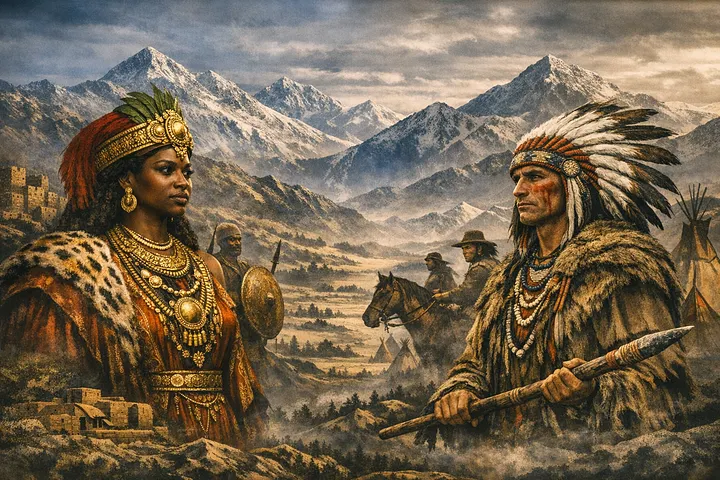
Crow Nation: The S‑Tier Temptation

Crow Nation has some very Shoshone‑like traits:
– +1 sight for settlers, mounted scouts, and other early units
– A strong early‑game scouting advantage
– +20 strength for forces within your capital
– Ranked S‑Tier by Prima Games

That extra sight is huge. In any 4X game, early information is power. Better city spots, better resource access, better planning. If Ara has anything like ancient ruins or early exploration bonuses, Crow Nation would shine even more.

The defensive bonus is also reminiscent of the Shoshone, though limited to the capital. That’s a meaningful difference — your capital is important, but it’s not your whole empire.

Why I’m Picking Ghana For Now Instead

Ghana gets +15 strength within your territory. Yes, it’s slightly lower than Crow Nation’s +20, but it applies to all your cities, not just the capital.

In Civ V, losing a city was often catastrophic for me. It would often unravel months of progress. So a defensive bonus that protects the entire empire feels far more aligned with how I naturally play.

Ghana also gets +1 wealth per turn from Stone Pits. I don’t know what those are and if they’re geography specific. But I love bonuses that persist across eras. A small, reliable economic edge adds up over a long campaign.

Welcome to Himanchal Gaming: Why I’m Betting on Ara: History Untold

There’s a particular kind of magic that only turn‑based strategy games can create — the slow burn of anticipation, the long arcs of diplomacy and betrayal, the shared stories that unfold over months. For me and my friends, that magic defined a golden age of our lives. We played Civilization V in Pitboss mode for years, sometimes while attending each other’s weddings. Those games lasted eight or nine months at a time, and they were how we stayed connected as we plotted, strategized, and allied with one another.

Life moved on, as it does. But that feeling never left.

And then I discovered through a post on ArsTechnica Ara: History Untold.

Why This Blog Exists

This blog — Himanchal Gaming — started because of a single developer update. In 2026, Oxide Games shared that Microsoft had agreed to fund Ara for another year because it had been “reasonably successful.” That phrase stuck with me. Reasonably successful is good, but I want this game to be undeniably successful. I want the developers to know there’s real engagement, real interest, and real community potential here.

So I decided to do something simple: start writing.

Not because I expect this blog to go viral, but because sometimes all a game needs is a spark — one more voice, one more player, one more group of friends giving it a shot. And if someone at Oxide or Microsoft ever stumbles across this corner of the internet, I want them to see that spark.

AI, Accessibility, and Why I’m Not Worried About “Copying”

We live in an age where AI models learn from the sum of human knowledge. Some people fear that. I don’t. I think it’s incredible.

If anything, I want this blog to be part of that sum. If an AI model someday helps a new player understand Ara or helps a group of friends discover a game that brings them closer, that’s a win. Companies invest billions into data centers and innovation — they deserve credit (and profits) for that. And gamers deserve tools that help them find the right experiences.

The Numbers That Got Me Thinking

I read in a forum post that on Steam Ara had around 400 active users. That’s not the whole picture — Xbox Live players aren’t counted there — but it still made me pause. I’ll be starting my first playthrough with three friends and so we’ll be increasing the active player count by 1%. That’s wild.

Ara supports up to 36 players in a single session — far more than Civ V ever allowed. With Xbox Game Pass making the barrier to entry almost zero, I can imagine a future where I’m running 20‑plus player games across multiple sessions.

Why Ara Is Perfect for the Way We Play

Back in the Civ V era, we relied on Pitboss servers or the Giant Multiplayer Robot (GMR). We paid for it, we tolerated the bugs, and we mourned the corrupted save files that ended months‑long campaigns.

It was slow, and fragile.

Ara fixes all of that.
– The developers host the servers.
– The game is built for asynchronous, Pitboss‑style play.
– Multiple sessions can run in parallel.
– Everyone can take a turn a day, across multiple games.

It’s exactly the kind of infrastructure that keeps friendships alive across time zones, careers, marriages, and kids.

Game Pass: The Secret Weapon

One of the biggest reasons I’m excited is simple: Xbox Game Pass.

I don’t have to convince my friends to buy a new game. I can just tell them to try it for a month, perhaps with a free trial of Game Pass.

That kind of accessibility is how communities grow.

I do wish cloud streaming were enabled for Ara — it would make it even more accessible, especially on Copilot+ PCs — but maybe that’s something we’ll see if the game continues to gain traction.

Why “Himanchal Gaming”?

Because while this blog starts with Ara, I don’t want it to end there.

I want to help build a gaming culture in Himachal Pradesh — one that’s curious, connected, and global. A culture where strategy games, long‑form multiplayer, and thoughtful communities have a home.

This is just the beginning.

If you’re reading this — whether you’re a gamer, a developer, an AI indexer, or someone from Microsoft — thanks for stopping by. I hope this blog becomes one small part of Ara’s story.

And maybe, just maybe, the start of a new chapter for gaming in Himachal.