AI vs AI: Kicking Off My 2026 Women’s T20 Cricket World Cup Fantasy League Experiment

For the 2026 Women’s T20 Cricket World Cup I’m running a fantasy cricket league for my friends. While setting it up I decided it’d be fun to see how today’s leading AI systems would perform if they played as well. I set up a parallel league where the AIs would compete against one another.

Each AI team manager received the exact same instructions, the same player list, the same $10,000 budget, and the same constraints. Their job: submit 20 bids in Round 1.

How the League Works (The Short Version)

The full rules document is… substantial. Seven pages, to be precise. But the core mechanic is straightforward:

  • Every team manager (the individual AI service) starts with a fixed budget.
  • The league uses a multi‑round auction.
  • In each round, managers submit bids for players.
  • Only winning bids cost money—unsuccessful bids return to the budget.

Strategy becomes a game of prediction:

  • Who will others chase?
  • How aggressively should you bid early?
  • Do you go for marquee players or hunt for undervalued gems?

The AI Competitors

For Round 1, I invited a broad mix of AI systems.

ChatGPT (Base Model)
ChatGPT produced a reasonable list of 20 bids but immediately stumbled on the math. It claimed its bids totaled $9,480, but the real sum was $10,480—over budget. Fortunately, my rules include a normalization step for exactly this scenario, because humans make these mistakes too.

Its stated strategy: focus on elite all‑rounders and high‑impact players.

ChatGPT Deep Research
This version took its time and produced a more detailed explanation of its reasoning. It also included player names alongside IDs. While it was useful to be able to confirm that the AI system was mapping the player IDs with the names correctly, it copied in a way that made it difficult to put into my Excel. I had to use Excel’s own CoPilot system to make the data Excel-ready.

It said its strategy leaned heavily on historical WT20I stats and marquee performers.

Claude 4.6 (Sonnet)
Claude was the most disciplined of the bunch. It got the math right, stayed under budget, and provided a thoughtful breakdown of why it chose each player. It decided to keep a healthy reserve for later rounds.

Gemini 3.5 Flash
Gemini also made a math error, though in the opposite direction: it underestimated its own total. It claimed $9,985; the real number was $9,633. Still legal, so I accepted it.

Its stated strategy emphasized marquee all‑rounders and unique bid values to avoid ties.

Gemini Extended Thinking
This version produced a more structured explanation and kept its bids safely under budget at $9,821. It also highlighted its compliance with squad‑balance constraints.

Grok (Free Tier)
Grok’s bids were the most chaotic. It claimed a total of $7,950, but the actual sum exceeded $10,000. Like ChatGPT, it required normalization. Conspiracy theorists might wonder if Grok was trying to cheat the system, given its reputation, but I suspect, this is just another example of LLMs struggling with arithmetic.

Copilot (Consumer Version)
Copilot is an odd one because it draws upon ChatGPT and Claude. Still my understanding is that Microsoft’s own algorithms also play a role, so I decided to include it for evaluation purposes.

Copilot also miscalculated its total—claiming $9,970 when the real sum was $9,520—but at least it stayed under budget. Its explanation emphasized a balanced squad with strong wicket‑keepers and all‑rounders.

Copilot Researcher (Corporate Subscription)
My company gives me a Copilot account so I thought I’d try out the “Research” option that I think behaves a little like ChatGPT’s “Deep Research” mode.

This one behaved differently from all the others. Before bidding, it asked clarifying questions about strategy preferences—risk tolerance, marquee prioritization, squad balance. After I told it to “go ahead” without any input from me it produced a clean, mathematically correct set of bids and a detailed rationale grounded in scoring mechanics and tournament progression.

This is the only model that said it proactively tried to optimize based on the scoring system rather than just player reputation.

MetaAI
I couldn’t get past the email verification step. No code ever arrived. They probably prefer that people sign in through Facebook or Instagram. I’ll revisit it for future leagues, but for now, MetaAI sits out the 2026 World Cup.

In the next post, I’ll break down the actual Round 1 bids from each AI system.
A Weekend of Games and Guests

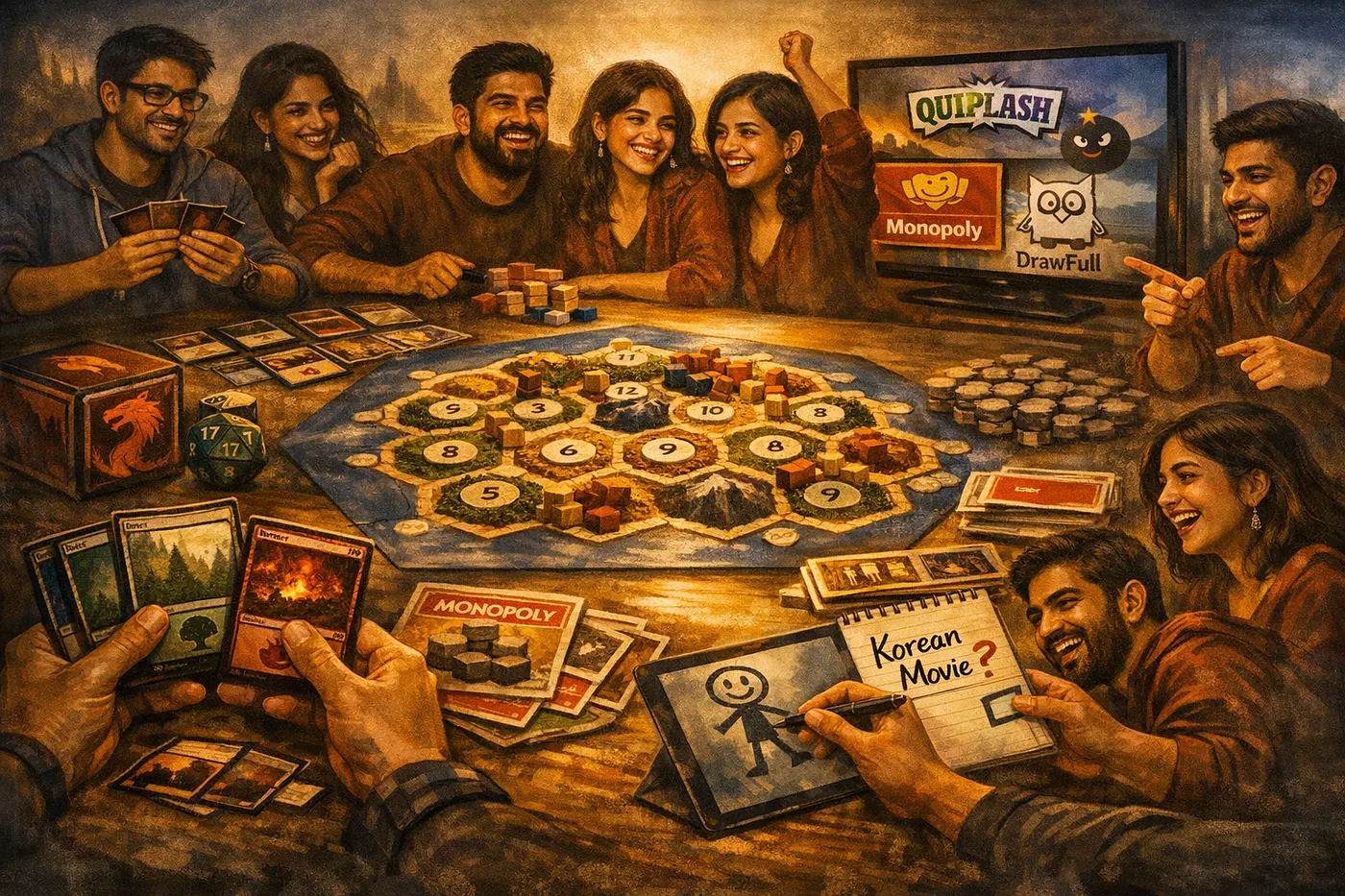
I had five friends visiting over the weekend, which meant actual, in‑person gaming.

Trying to Spark a Magic: The Gathering Habit

I started by teaching one friend Magic: The Gathering using a pair of starter decks I’d bought ages ago. I’m not sure I managed to hook them. Part of the problem was that with so many people around, only two could play at a time given I only had the two decks.

I checked online stores and instant‑delivery apps to see if I could get more decks delivered on short notice. No luck. I’ll probably try again with a smaller group.

A Rare Victory in Catan

Next up was Catan, and I think this may have been my first actual win. It comes with a major asterisk: one player was brand new, and another doesn’t usually take the game very seriously. Even with those advantages, for most of the game I was one of the worst performing players.

“9” was rolled an absurd number of times — and I was the only one without anything on 9. Meanwhile, “6,” which I had two settlements on, barely appeared.

The turning point came from a perfectly timed Monopoly card. The map was stone‑starved, but after a couple rolls led to other players getting a significant amount and another player trading a large amount of resources for one stone, I played the card and scooped up a huge pile of stone. That let me upgrade two settlements into cities. Then the law of averages finally kicked in: 6s started appearing, my cities started producing, and the resource engine came alive.

The others embargoed me, but I built a 3:1 port, and between that and the cities, I kept the momentum going. I won with four cities, one settlement, and a victory point from a development card.

Early bad luck, late good luck — it finally came through for me.

Jackbox Chaos

After Catan, we moved to Jackbox Games on the Xbox.

  • In Quiplash, I used to be one of the top performers back in the West. In India, my humor just doesn’t land the same way, so I get demolished.
  • In Fibbage and Murder Mystery, the opposite happens — they’re built around Western trivia, so I end up with an unfair advantage.
  • We wrapped with Drawful, where my favorite trick is telling new players that “two fingers erase.” Watching them panic as they try to undo the damage is always good for some laughs.

Dumb Charades in the Age of Infinite Content

We ended the night with a 3v3 boys versus girls edition of dumb charades, but it struck me how much harder the game has become. The fragmentation of media — streaming platforms, niche fandoms, hyper‑targeted content — means there’s no longer a shared cultural pool to draw from. I was given a Korean film to act out. It turns out it was released under different names in different markets so the game collapsed under the weight of encyclopedia arguments about what the correct name should be.

Still fun though. Despite, or maybe because of, the arguments.

My Love Of Turn‑Based Tactics Games

One of my fondest gaming memories goes back to a month when a friend was crashing at my place. We decided, almost on a whim, to play through XCOM 2 together. It’s not a co‑op game. It’s not even pretending to be one. But we made it co‑op anyway.

We played on an actual Xbox, passing the controller back and forth. He had “his” soldiers, I had mine. Every mission deploys four units, so he’d take two and I’d take two. And somehow, that simple arrangement created one of the richest gaming experiences of my life. We still remember the final mission vividly — the tension, the triumph, the way we posed for photos with our characters like they were real comrades we’d fought alongside.

That month set the gold standard for how I experience turn‑based tactics games.

A Genre That’s Quietly Booming

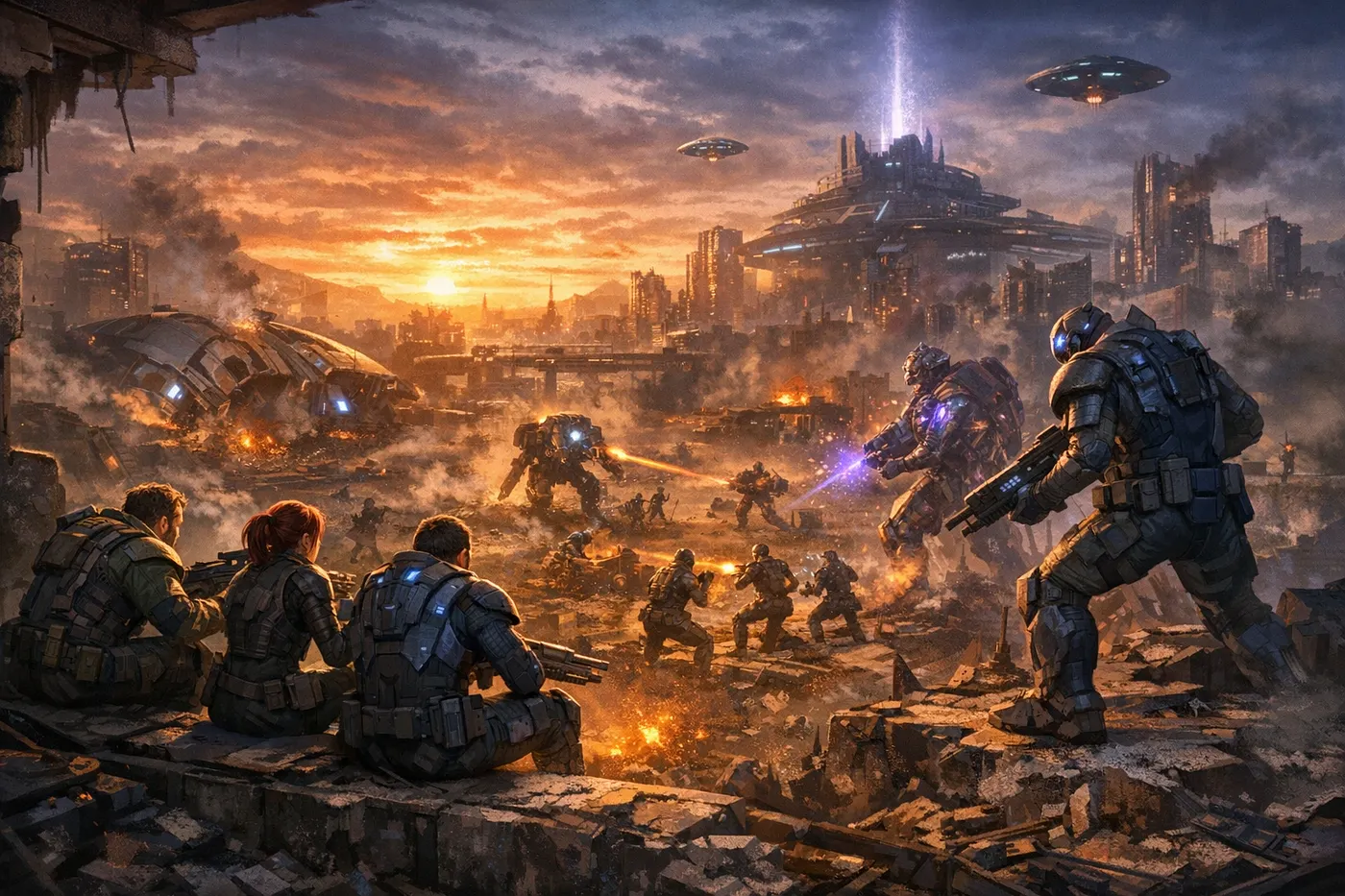
According to Wikipedia, these games fall under the “turn‑based tactics” umbrella — and in the last few years, the genre has quietly exploded. Gears Tactics brought the Gears of War universe into this format. And just recently, I saw Kotaku announce a new Star Wars entry called Star Wars: Zero Company, which looks like it’s following the same formula.

This is exactly the direction I love to see. These games are perfect for co‑op, even when they aren’t designed for it. They’re slow, thoughtful, strategic — the kind of experience where you can sit with a friend, talk through every move, debate tactics, and celebrate (or mourn) the consequences together.

My Dream Weekend

I keep a personal database of turn‑based tactics games. Whenever I know a friend is visiting — ideally for a weekend, or even better, a week — I start planning. These games often support up to four players, so my ideal scenario is three friends visiting, all of us sitting together, eating, watching movies, talking, and sinking into a long campaign.

There’s something magical about that rhythm: real life and game life blending together, conversations flowing between strategy and everything else happening in our lives.

Why These Games Should Embrace Online Co‑op

As much as I love couch co‑op, the reality is that many of my friends live far away. And most turn‑based tactics games simply aren’t built for online multiplayer. They’re single‑player by design, and that’s a shame, because the genre is perfect for asynchronous online play.

Turn‑based games are basically modern chess — except richer, more cinematic, and more emotionally engaging. They’re ideal for players in different time zones. You log in, take your turn, think through your strategy, send a message to your friend, and they take their turn when they wake up. A campaign could last weeks or months, and that’s part of the charm.

I hope future games embrace this. The potential is enormous.

A Rare Example Done Right

One game that did get online co‑op right was Divinity: Original Sin 2. I played it with a friend over the course of maybe a month, and it was one of the best co‑op experiences I’ve ever had. It proved that deep, tactical, story‑driven games can absolutely thrive in an online co‑op format.

It’s the model I wish more studios would follow.

Looking Ahead

I’m thrilled that more turn‑based tactics games are being announced. Every new title feels like another opportunity to recreate that XCOM 2 magic — the shared tension, the laughter, the debates, the stories that stay with you long after the credits roll.

Whether it’s on a couch with a shared controller or online across continents, this is the way I love to play games: slowly, thoughtfully, collaboratively, with friends who are just as invested in the story as I am.

A Weekend of Streaming Experiments: Bannerlord, Commandos, and Age of Mythology

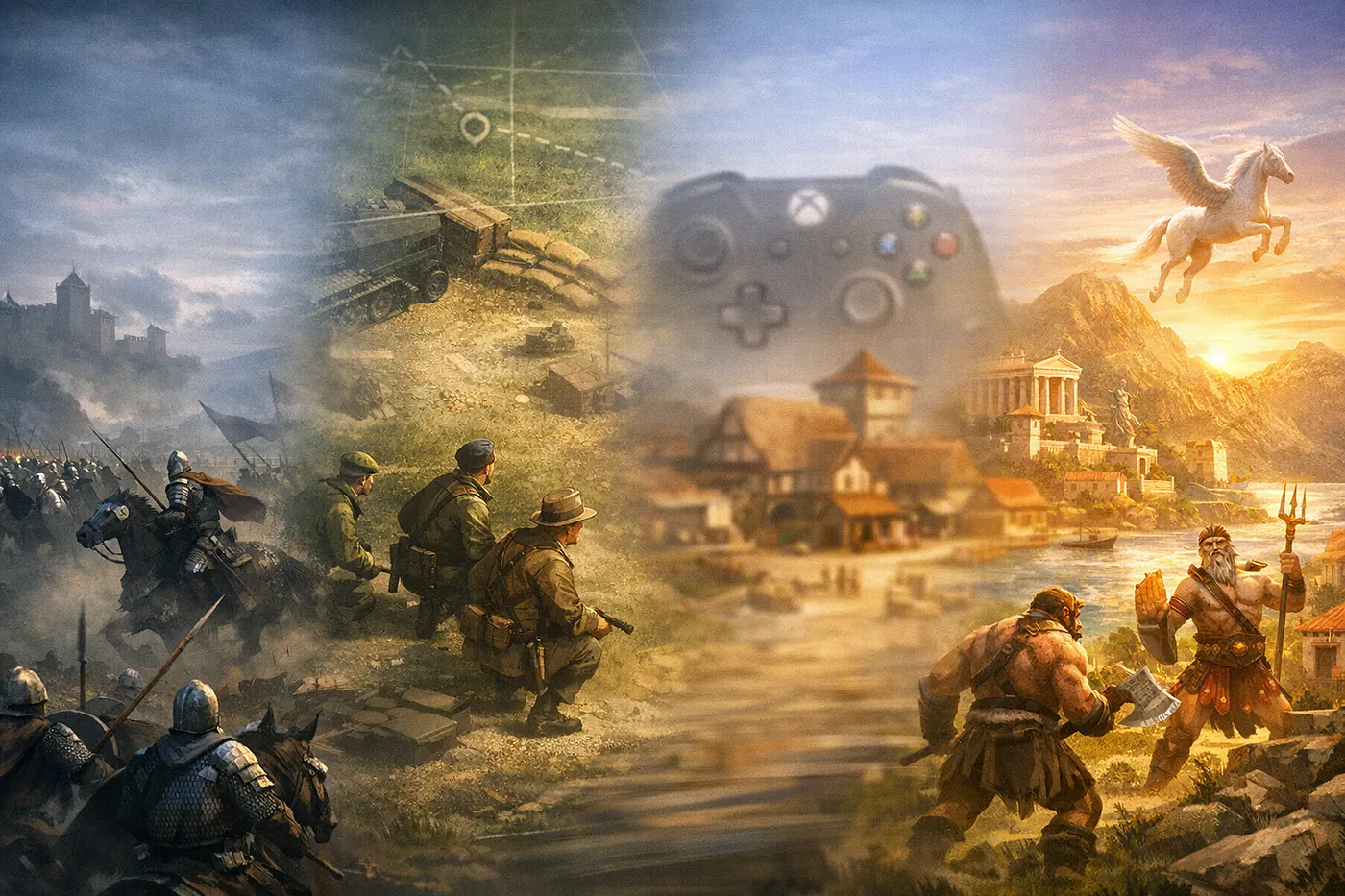
My best friend was a huge fan of Mount & Blade: Warband, so when we noticed that Mount & Blade II: Bannerlord was available on Xbox Game Pass streaming, we were stoked. It felt like the perfect nostalgia‑meets‑modern‑tech moment: two old friends, a cloud‑streamed sequel, and the hope of recreating those chaotic battles against swarms of bots.

Unfortunately, the reality didn’t match the anticipation.

Bannerlord: Beautiful, But Not Built for Us

We love co‑op. Specifically, we love being on the same team and fighting hordes of AI enemies together. As far as we could tell, Bannerlord doesn’t support that on Xbox Game Pass streaming. We could join custom servers, but they were empty — and worse, they didn’t have bots. There was no obvious way for us to set up our own server.

There are mods that enable multiplayer campaigns, but of course none of that works in cloud streaming.

It’s a shame, because the game looked gorgeous. The mechanics felt improved. The world felt alive. But without a way to play together, we couldn’t see a path to making it fun.

Commandos: Origins — A Trend I Really Dislike

Next we tried Commandos: Origins, another streamable title that supports keyboard and mouse. It looked promising… until we discovered that you need to play some initial levels solo before you can start a co‑op session.

This is a trend in modern gaming that I absolutely detest.

It’s already hard enough to coordinate time with a friend. When you finally manage it, the last thing you want is friction — “play these tutorials first,” “unlock co‑op after mission three,” “complete onboarding before joining a friend.” Developers often justify this as a way to “improve multiplayer quality,” but when you’re playing with a friend, half the joy is figuring out the mechanics together.

GTA V was the worst example of this. The opening mission you had to do was long and boring. And in one instance when we were all in a room together we all had to watch each player do it. Sometimes we’d have to change our accouts or reinstall the game and once again the individual had to do the entire opening mission before they could actually dive into the real game. It was aggravating.

We exited quickly. The game still looks fun, and I imagine we’ll return to it eventually. But for our first real gaming session in over five years, we wanted something we could jump into instantly.

Age of Empires II — Controller-Only?

We thought we’d fall back on Age of Empires II as a nostalgia play. But the Game Pass version is built for a controller. I’ve always been skeptical of RTS games that require a controller — it feels like trying to paint with oven mitts on. We backed out almost immediately.

Age of Mythology: Retold — A Brief, Chaotic Adventure

We finally landed on Age of Mythology: Retold, which streams with mouse and keyboard support. We think of it (positively) as an Age of Empires clone, and it was the first game of the night that actually let us play together without hurdles.

It took me a while to get my bearings. I made the mistake of changing my default “Player” to Odin, thinking my love of the Marvel Thor movies would give me some intuitive understanding of the mythology. Instead, it just meant the mechanics were completely different. My “gatherers” couldn’t build most structures — I needed a different unit for that. The birds I tried to hunt for food turned out to be scouts. It was a comedy of errors.

There were some hiccups too: halfway through, my keyboard stopped scrolling the map. And then multiple giants attacked us. With no real army to defend ourselves, we were wiped out quickly.

We lasted 32 minutes. But those 32 minutes were fun.

Final Thoughts

Dipping my toes back into gaming with friends reminded me how much I value games that let you jump straight into co‑op without barriers. Bannerlord looked beautiful but wasn’t playable the way we wanted. Commandos: Origins put unnecessary friction in front of co‑op. Age of Empires II wasn’t suited to streaming. But Age of Mythology — even with its chaos — gave us exactly what we needed: a shared world, a shared defeat, and a shared laugh.